Walk onto almost any type of active building and construction website and you will see the typical mix of hard hats, high-vis vests, and equipment. What you do not always see is exactly how close that site is to a significant clinical emergency. One wrong action on scaffolding, a gone down grinder, or a heat-stressed apprentice on a hot slab can relocate you from routine work to dangerous injury in seconds.
That is where fast first aid and CPR training quits being a box-ticking exercise and enters into your threat control. When you are encountering a looming customer audit, a case notification, or a governing target date, you do not simply need training. You need the right individuals educated, to the best level, as swiftly as feasible, without closing down the job.
This post looks at exactly how construction firms can fulfill first aid and CPR commitments under tight time stress, without sacrificing top quality. It draws on what actually takes place on hectic websites: final require a fast first aid course, supervisors dragged out of tool kit meetings into first aid and CPR training classes, and safety supervisors attempting to resolve production targets with legal duties.
Why building websites seldom have "extra time" for training
On paper, establishing first aid training is simple. Schedule a first aid course, put some people with, get the first aid certificate, upgrade the register. Any individual that has worked around cranes, concrete pumps, and subcontractor timetables knows it is not that tidy.
Construction sites are under pressure from a number of angles simultaneously. Programs slip in poor weather, then management tries to fast first aid course near me claw back time. Secret workers juggle multiple duties. A single delay with a subcontractor can waterfall across the site. Because atmosphere, pulling several employees off the job for a full-day first aid training course can feel close to impossible.
I have seen managers attempt to keep up just a single designated initial aider on a multi-level job, on the unsteady presumption that "they are usually close-by." That works up until your only first aider is the one that obtains pain, or is embeded a lift with a distribution, or is out at a prestart meeting on an additional component of the project.
The truth is candid. You have two non-negotiable restrictions:
First, legislative and customer requirements that dictate minimum first aid express childcare first aid insurance coverage, consisting of both varieties of first aiders and the degree of training they hold.
Second, the straightforward truth that ambulance reaction times can not beat physics. On some city websites, you may see a rescue in 10 mins. On remote facilities work, you could be looking at 30 to 60 mins before specialist assistance gets here. In both cases, the first 3 to 5 mins of response on website issue greater than any kind of siren in the distance.
Fast first aid and express CPR training options exist especially to work around these restraints without decreasing the bar.
What "fast" first aid truly suggests in practice
Fast first aid courses are not around reducing corners. If a service provider provides a fast certification that misses core sensible skills, be wary. Regulatory authorities and good auditors will certainly not accept a lightweight card in place of really evaluated skills.
When trainers speak about fast first aid training, they typically suggest several of the following:
Shortened face-to-face sessions, supported by robust pre-course online learning.
More adaptable organizing, such as morning or late afternoon express first aid training, so employees shed much less productive time.
On-site training, so travel time drops to practically no and individuals train in their real work environment.
Targeted course options, so you match the kind of first aid and CPR course to the specific risks on your site as opposed to taking the lengthiest, broadest alternative by default.
The key is compression, not dilution. For instance, a typical first aid and CPR course that utilized to run for a complete day might currently be provided as a 3 to 4 hour express first aid course, as long as individuals finish a substantial piece of theory in advance. If the online pre-learning is treated seriously, you can reach the course ready to focus on hands-on skills like CPR, hemorrhaging control, fracture administration and functional scenarios.
I have actually run sessions like this for construction staffs where we began at 6.30 am, ended up in the past lunch, and still met regulatory requirements. The site maintained a lot of its day, and the training synced into the existing prestart culture.
Understanding your lawful and client obligations
Before you start searching for the nearest fast first aid course near me, you ought to be clear regarding what you need to comply with. This varies by jurisdiction, yet a couple of patterns are consistent across the majority of building and construction environments.
Regulators usually need a risk-based assessment of your workplace. That assessment drives the number of initial aiders, the type of first aid courses they must hold, and the tools you require. On a high-risk construction site, authorities and major clients frequently expect at the very least a single person per work group or per flooring to hold a present first aid and CPR certificate.
In some regions, there is a formal FAP first aid structure or similar group structure, which sets rated degrees of training for various danger profiles. A major construction job might need both fundamental first aiders and a smaller sized number of advanced very first first aid course in Launceston -responders, especially if the site is remote or complex.
Clients add an additional layer. Many federal government and tier-one principals mandate that every supervisor, supervisor, or leading hand holds present first aid and CPR training. Some define that all child care or pupil visitors to site must be supervised by someone with express childcare first aid training, particularly if you host college tours or community groups.
Leaving this till the eleventh hour results in frenzied calls:

"We have an audit following week and three of our first aiders' certificates have just ended."
"We have a new contract that needs express childcare first aid courses for all our site check out coordinators, and they start in 10 days."
This is where express first aid courses, fast CPR correspondence course, and flexible companies are not simply practical, they are typically the difference between death and falling short an audit.
Matching course types to building risks
Not all first aid courses are equivalent, and much more training is not always far better. What matters is placement between the course and the risks your workers in fact face.
For a regular building and construction site, you ought to think about a minimum of the list below types of training:
First aid and CPR courses for core website very first aiders. This is your standard for people most likely to respond initially to an incident, such as supervisors, HSE advisors, and chosen employees in each work group.
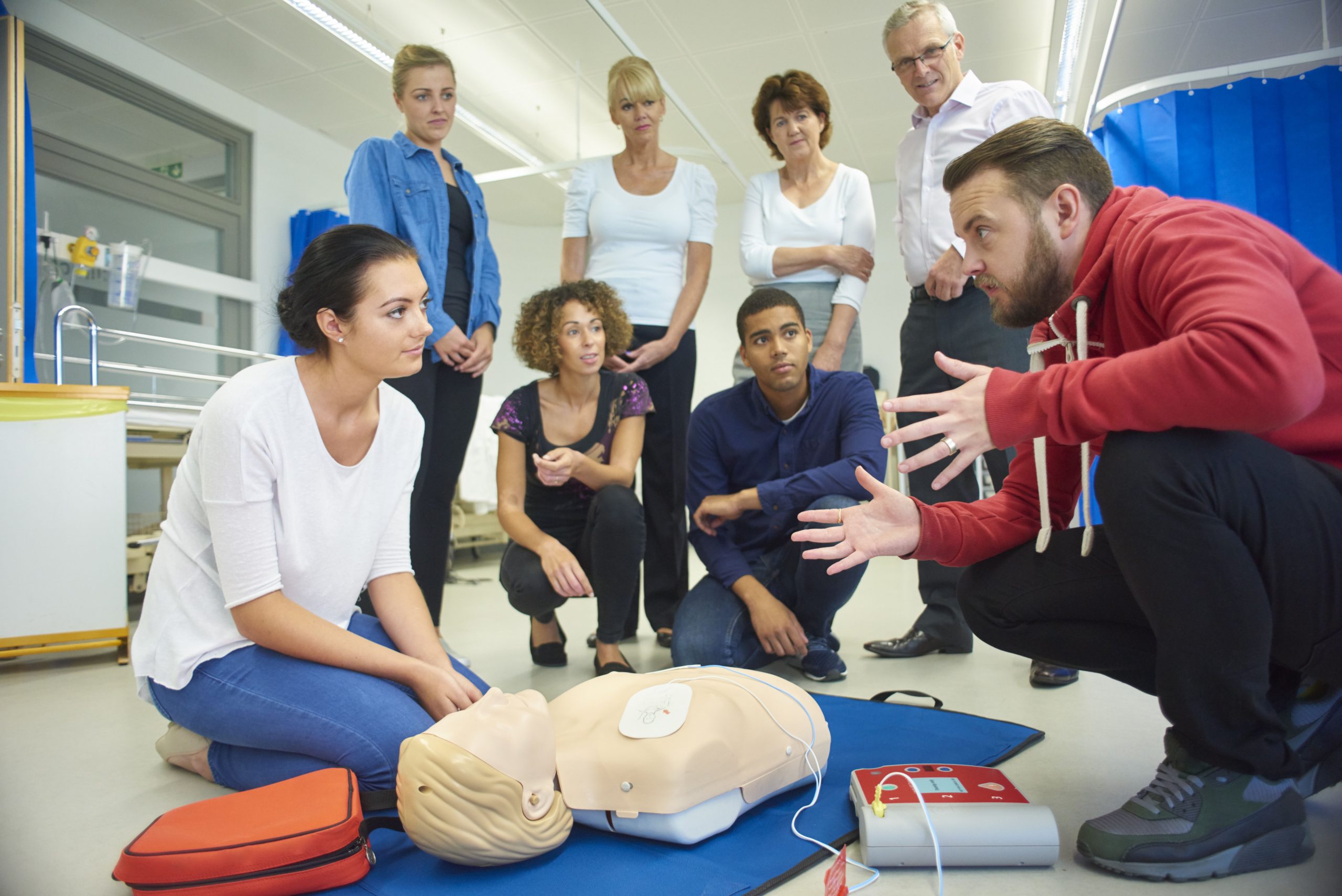
Express CPR courses as annual refreshers. Pressing CPR training into a concentrated, sensible session every 12 months maintains abilities sharp. It prevails to run express cpr training for whole staffs at once, rotating them through in small teams across a morning.
Fast first aid courses as top-ups or for brand-new beginners who arrive just as you know your first aid coverage is thin. Fast first aid training often functions ideal when you currently have a stable group of fully trained very first aiders and only need to include one or two even more at short notice.
Express child care first aid courses where your site has normal call with youngsters or young people. This consists of projects connected to schools, neighborhood centers, or domestic developments that entail display screen units and public open days. In those cases, express childcare first aid training generates skills for choking babies, paediatric CPR and child-specific emergencies that basic construction-focused first aid may not prioritise.
Specialist choices for specific dangers. As an example, if your site has constrained areas, high-voltage job, or dangerous chemicals, you might require added competency-based training or circumstance work layered on your core first aid certificate.
From experience, the best technique is to map your duties to course types. For instance, task managers and engineers who invest restricted time on the tools may just need express CPR and basic first aid exposure. Leading hands, crane supervisors, and plant operators, that are commonly first on scene when something fails, must complete full first aid and cpr courses, with normal refreshers.
The fact of "express" and "fast" courses
Marketing language can be unsafe. I have seen carriers identify a course as express first aid, only to uncover it still needs a full day in the class, plus an on-line component. On the other hand, some truly fast cpr courses and fast first aid courses utilize mixed understanding successfully and save several hours of in person time.
A genuinely reliable express first aid or fast CPR course usually has three characteristics.
First, solid pre-course material. Individuals obtain clear on-line modules, videos, and brief tests prior to the useful session. They can complete this on a smart device or tablet from home or during set up training time on website. This front-loads the theory: lawful obligations, basic makeup, DRSABCD, and acknowledgment of usual injuries.
Second, a sensible session concentrated almost totally on hands-on abilities. That time is made use of for circumstances on CPR manikins, hemorrhaging control with appropriate stress and bandaging, immobilisation of suspected cracks, spine safety measures, administration of shock, and experiment salbutamol inhalers or epinephrine auto-injectors where appropriate. Actual express cpr courses will certainly spend a large piece of time on compressions and ventilations, with individuals cycling with various situations and comments devices.
Third, analysis incorporated into practice. As opposed to composed tests controling the day, assessment is split normally right into the functional work. The fitness instructor observes, trainers, after that officially evaluates in sensible sequences.
If a service provider guarantees "fast first aid" however can not describe which material is blended, just how concept is provided, and for how long you in fact spend doing hands-on training, you might be considering a marketing tag as opposed to an authentic express solution.
Planning under a due date: a functional path
When you uncover you run out conformity, panic is all-natural, however it does not aid. There is a foreseeable sequence that safety and security managers on building sites can comply with to obtain from "we are brief on initial aiders" to "we are covered once more".
Here is a straightforward planning course that functions under time pressure:
Confirm your lawful and client minimums, including required numbers, course kinds, and expiry dates. Audit your present first aid and cpr training status, worker by worker, and identify gaps. Decide who requires what level of training, prioritising risky duties and protection throughout shifts, floorings and work fronts. Contact carriers that offer fast first aid courses and express cpr courses, asking particularly about mixed alternatives, onsite shipment, and readily available dates before your deadline. Lock in times that disrupt job least, after that connect early and plainly with supervisors so they can plan crews around the training.Handled by doing this, a limited due date ends up being a scheduling issue, not a dilemma. I have seen large websites move from near no protection to a totally compliant first aid and CPR structure in under three weeks making use of combined fast first aid courses and staggered fast CPR refresher sessions.
Making first aid actual for building and construction workers
One of the largest blunders I see fitness instructors make is utilizing common office-style scenarios for building and construction teams. A roof covering team or concreting gang will certainly turn off promptly if every example sounds like a paper cut at reception.
If you desire your first aid training to stick, especially in fast or express styles, demand that courses be contextualised to building work. For example:
Run CPR circumstances that involve an employee located less competent at the base of a ladder, or a concreter who breaks down from prospective warm stroke.
Practice bleeding control utilizing substitute injuries from grinder discs, nail weapons, or rebar cuts. Obtaining workers to rehearse firm pressure under "noisy" circumstances makes a substantial difference.
Talk regarding crush injuries from plant, and exactly how to manage entrapment till emergency situation solutions arrive.
Discuss genuine threats on that particular site: open penetrations, formwork, precast panels, hot job, silica dirt, and the implications for very first aid.

Even express first aid courses and fast cpr sessions can be abundant with real-life context if the instructor understands construction. Workers pay even more interest, keep in mind extra, and are much more most likely to step up in a real emergency.
I still bear in mind a scaffolder in a blended first aid and cpr training course saying "I assumed CPR was for old chaps in workplaces, except us." 2 months later, his team used those abilities on website when a subcontractor went into cardiac arrest. The male endured. That scaffolder is the very first to suggest for robust refresher training now.
Integrating first aid into site systems
Compliance is not only regarding specific first aid certifications. It is also regarding how first aid ability matches site systems, to make sure that when something happens, the feedback is organised as opposed to chaotic.
Effective sites weave first aid right into:
The emergency reaction plan, with clear roles for initial aiders, communication methods, and accessibility paths for emergency vehicles.
The website induction, where new employees are informed who the first aiders are, where packages are located, and what to do if they witness an incident.
Daily prestart and tool kit conferences, where managers advise staffs of particular threats and check that first aid coverage is in area for planned high-risk tasks.
Incident evaluations, where the quality of first aid performed is evaluated along with the origin of the occasion. This is where you determine gaps that could need targeted refresher training or additional express first aid courses.
I have actually serviced sites where first aid training was made use of as a springboard to boost more comprehensive safety and security culture. As soon as employees saw that administration bought their capacity to take care of each other, they became extra happy to speak out regarding hazards, near misses out on, and tiredness. Fast first aid training can start as a compliance exercise and end as a trust-building tool.
Managing change work, remote sites and subcontractors
Construction does not constantly run Monday to Friday, 7 to 3. Evening pours, weekend shutdowns, and remote pipe or wind ranch tasks include layers of complexity.
For shift job, your first aid protection must follow the job. It is not nearly enough to educate a team of day-shift employees and hope for the very best at night. Express cpr training in short night blocks can work well below, especially if you are trying to reduce fatigue impact on night crews.
Remote websites require a greater standard once more. On long-haul civil work, mine websites, or big solar farms, rescue action times might be long. Some projects buy higher-level FAP first aid training or comparable remote location first responder programs, incorporated with more comprehensive kits and equipment. Also here, fast first aid courses still have a function, specifically for subcontractors that arrive partway through a project and require rapid upskilling to match the site standard.
Subcontractor management is one more real-world headache. As a major service provider, you might define that all subcontractor managers hold an existing first aid and cpr course certificate. Then the subcontractor arrives with obsolete or dissimilar qualifications.
One effective method is to provide express first aid courses and fast cpr refresher courses to subcontractors on or near your website. You work out team prices with a supplier, schedule routine sessions, and afterwards make it an assumption that subcontractors use those sessions to meet your standards. It fixes a compliance problem and signals that you expect consistent safety performance across all companies on site.
Avoiding common errors when time is short
When target dates loom, faster ways tempt. Several of one of the most damaging ones I have actually seen on building projects include:
Relying exclusively on online courses for first aid and CPR. Online-only discovering can be handy for theory, however it does not please most regulatory authorities for sensible abilities like CPR, bleeding control and secure casualty handling. Employees additionally lose the muscle memory that only hands-on method can build.
Letting certificates gap "simply for a couple of weeks." Regrettably, incidents are indifferent to your admin routine. If a significant injury happens while your nominated initially aider's certification is run out, expect rough concerns in court or at an inquest, also if their practical skills are still good.
Training the exact same small team repetitively while overlooking wider coverage. On numerous sites, 1 or 2 supervisors get sent to every first aid course, while whole crews remain inexperienced. That looks great theoretically and falls short in method when the manager is off site or associated with the incident.
Choosing the absolute minimum first aid courses to tick a conformity box, without any respect for real threat. If you just ever before get the quickest, most affordable option, you might abide technically but leave workers under-prepared for plausible emergency situations like falls from elevation, crush injuries, or electrical incidents.
The antidote is frame of mind. Deal with fast first aid and express cpr courses as devices to supply the right training a lot more effectively, not as a means to avoid training completely. Mixed programs, express childcare first aid courses for pertinent staff, and regular fast CPR refresher courses all assist keep your criteria high while respecting time and budget realities.
What to try to find in a training provider
Not all first aid and CPR suppliers recognize building and construction. When you are under time stress and need top quality results, ask difficult questions.
Look for fitness instructors that can:
Describe details construction situations and demonstrate how their fast first aid courses attend to them.
Offer versatile organizing and onsite shipment, not simply dealt with classroom ports in a workplace district.
Provide clear information about the structure of their express first aid courses and fast CPR alternatives, consisting of pre-learning, in person hours, and assessment methods.
Demonstrate that their first aid and cpr course content straightens with acknowledged requirements and satisfies your regulatory authority's and customers' expectations.
Work with you on preparing first aid and cpr training classes throughout your task timeline, rather than offering you a one-off course and disappearing.
Some companies keep a panel of favored companies, including a minimum of one that specialises in express cpr courses and fast first aid training. That provides you options when unforeseen demands develop, such as onboarding a big subcontractor or reacting to lessons from a severe incident.
Moving beyond the bare minimum
Construction is inherently risky. No quantity of documentation adjustments that. What you can change is just how quickly and successfully individuals respond when something goes wrong.
Fast first aid and express cpr training are not shortcuts if they are run properly. They are approaches for obtaining the right abilities into the right hands in a manner that fits the realities of concrete pours, crane schedules and client deadlines. When backed by a clear understanding of legal commitments, thoughtful duty mapping, and assimilation right into daily website systems, fast training becomes one more control in your threat administration toolkit.
Workers see when a firm deals with first aid as a real concern instead of a second thought. They see that gets educated, exactly how commonly, and whether monitoring is willing to stop briefly manufacturing briefly so staffs can revitalize their CPR skills. The following time a person on your website asks about a fast first aid course or express cpr course, deal with that as a possibility, not just one more job. It may be the difference that keeps a severe event from developing into a fatality.